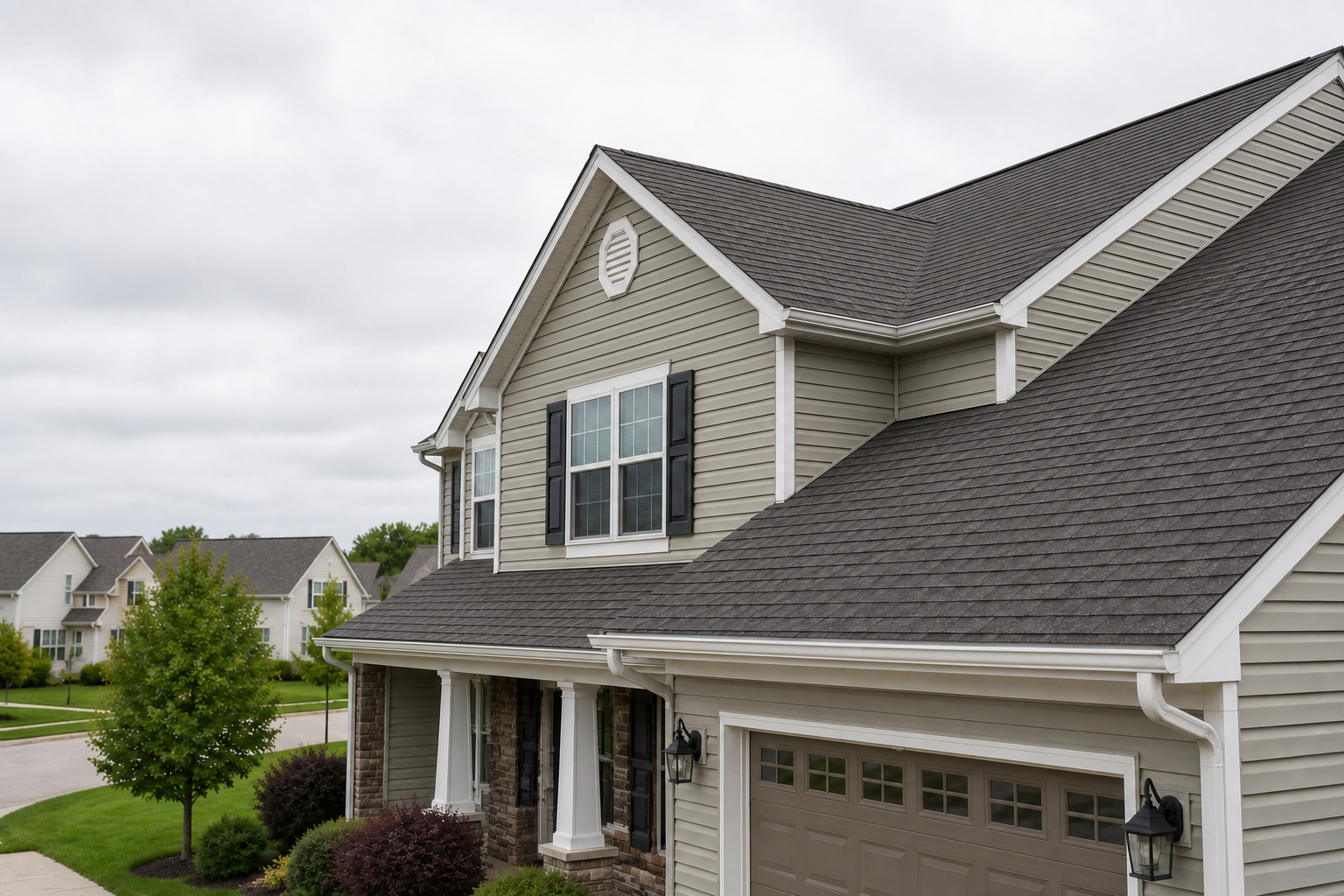
Tracing the leak instead of patching the stain
Water travels along the underside of the roof deck and down a rafter before it shows up on a ceiling, so the entry point is usually a few feet, sometimes several feet, from where the stain appears inside the house. We start in the attic whenever we can get up there, tracing dark staining or frost along the framing back toward the roof, then go up top and look at what is directly above that spot.
Patching straight above a ceiling stain without doing that tracing is the single most common mistake we see from a previous repair, and it usually means the same leak keeps reappearing a season later in a slightly different spot on the ceiling.
Vent boots, the quiet failure point
The rubber boot around a plumbing vent pipe dries out and cracks faster than shingles do, usually within ten to fifteen years, and a cracked boot lets water in around the pipe every time it rains or the snow on the roof melts near it. This is one of the most common leaks we find on Fargo roofs and one of the least visible from the ground, since the boot sits flat against the roof and looks fine unless you are standing next to it.
We replace boots that have gone stiff or cracked as routine maintenance on any roof we are already up on, since the boot itself is inexpensive and the water damage from a failed one is not.
Flashing at chimneys and walls
Flashing failures at a chimney or where a roof meets a wall are the next most common source, especially on older homes where the flashing was sealed with roofing cement rather than properly stepped and counterflashed. Roofing cement dries out and cracks within a few years in this climate, and once it fails water runs straight down behind the flashing. The correct fix is new step flashing woven with the shingle courses and counterflashing set properly, not another bead of cement over the old failure.
Wind and hail damage from a Red River Valley storm season
Summer here brings straight line wind and hail that a coastal roofing crew rarely deals with, and both cause damage that is not always obvious from the ground. Wind lifts individual shingles and breaks their seal without tearing them off completely, and hail bruises a shingle without necessarily cracking it, both of which can go unnoticed until a leak shows up months later. After a storm we check the whole roof, not just the side that took the worst of the wind, and we document what we find with photos in case it is useful for a claim.
When a repair is not the honest answer
If a roof has widespread cracked shingles, exposed nail heads across most of the field, or soft decking we can feel through the shingles, we say so rather than take a repair job that will not hold. A repair on a roof that has reached the end of its life is money that does not buy real time, and we would rather tell you that up front than have you calling again in a year.