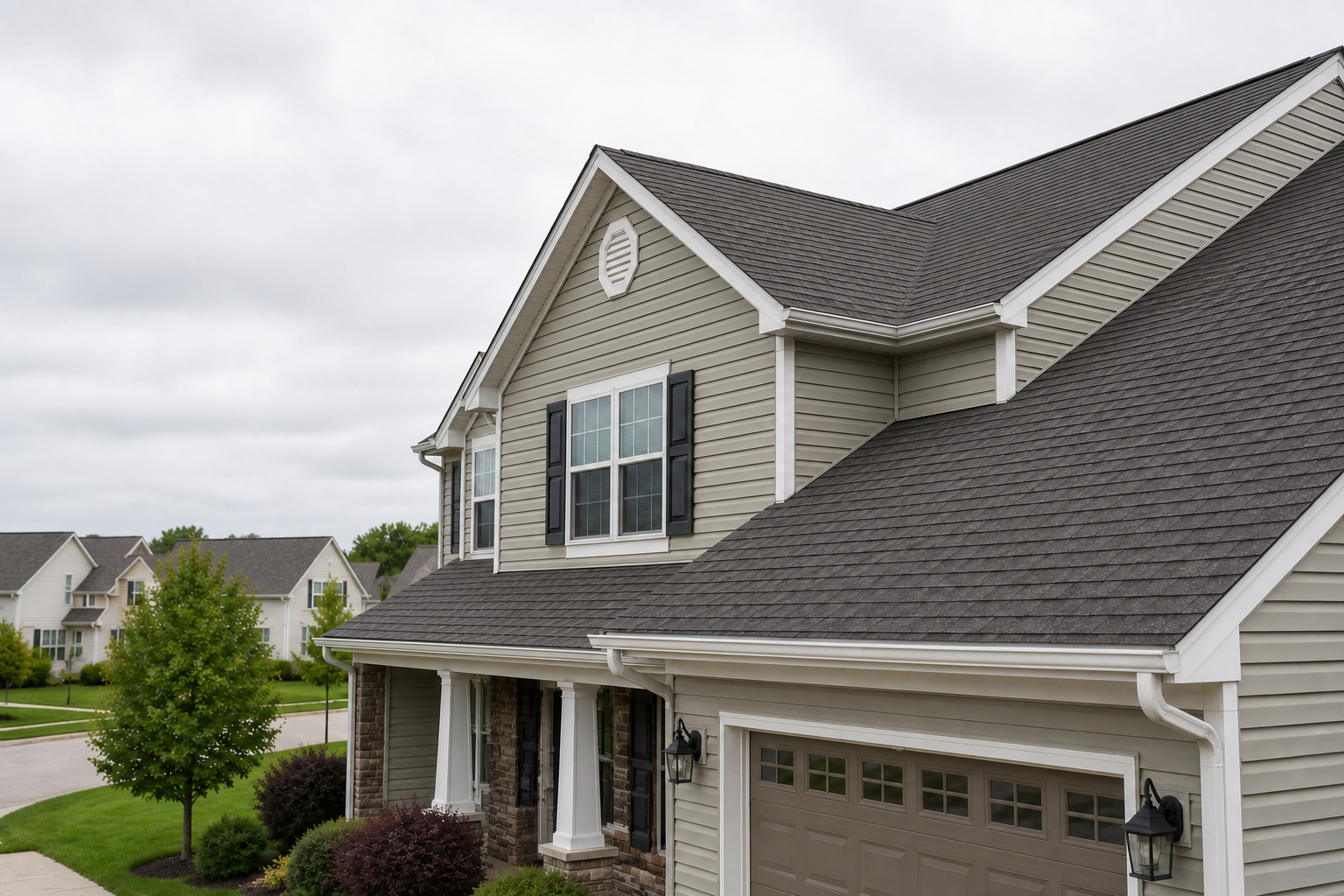
Why gutters and roofing sit together
The name puts gutters first because that is where most of our calls start, but a gutter problem and a roof problem are rarely unrelated. A gutter overflowing from a clog or bad pitch rots the fascia and rafter tails behind it within a couple of winters. A roof shedding ice unevenly ruins the gutter hanging underneath it. Treating those as two separate trades run by two separate companies usually means paying for the same repair twice a few years apart, so we run both under one crew and take responsibility for the whole system from the shingles down to the ground.
How Travis got here
Travis, who runs the crew, spent years hanging gutters and doing roof repair work for other outfits in the Red River Valley before starting this one. The thing that pushed him to go out on his own was watching jobs get scoped by someone who never left the truck, estimates written off a quick look from the driveway that missed the soft fascia or the blocked soffit vent that actually explained why the homeowner had called in the first place. Every estimate here starts with someone physically on the roof or in the attic, because a driveway guess and a real inspection almost never land on the same number, and the homeowner is the one who pays for that gap if it goes unchecked.
How a job actually runs
The first visit is an inspection, not a sales pitch. We get on the roof when it is safe to walk, get into the attic every time, and check every downspout to the ground rather than assuming the gutter itself is the whole problem. After that you get a written scope in plain language describing what we found and what the options are, with a repair option and a replacement option laid out separately when both genuinely exist, rather than bundled together so the cheaper one looks worse than it is.
The crew that scoped the job runs the job. We protect the yard and driveway during the work and sweep for stray screws and fasteners before calling it finished.
The houses we know
Fargo and the towns around it have a real mix of housing: older in-town neighborhoods with wood fascia and undersized original venting, newer subdivisions in West Fargo and Horace with builder-grade gutter systems, farmhouses out toward Casselton with a very different wind exposure, and Moorhead and Dilworth across the river seeing the exact same weather with their own permitting process on top. Knowing which is which, and what typically goes wrong on each, is most of what makes an estimate accurate on the first visit rather than the third.
Where we work
Fargo is home base. West Fargo, Moorhead, Horace, Casselton, Dilworth, and Kindred are all close enough that we are there most weeks, and we take jobs further out along I-29 and I-94 when the schedule allows.